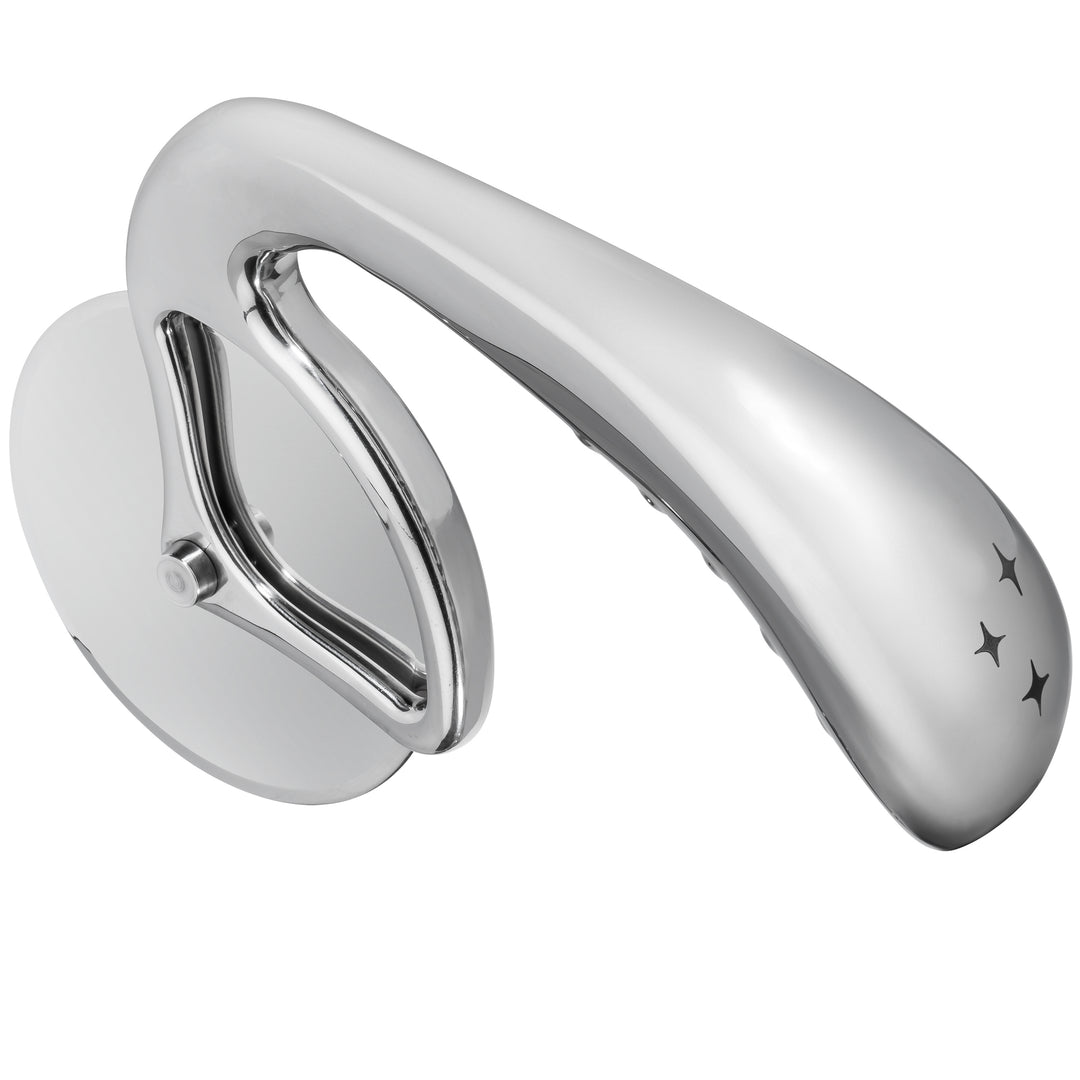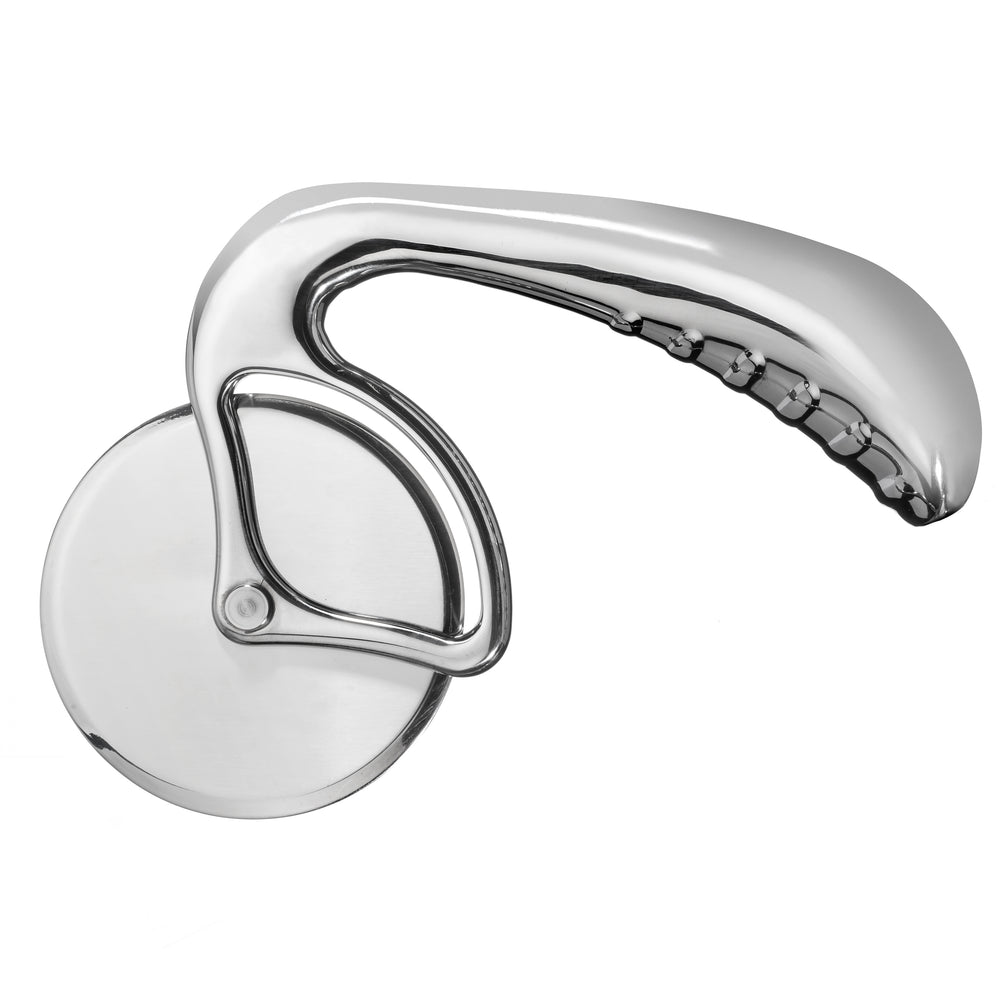


We here at Midnight Kitchen Tools believe in something simple: ice cream is good. Homemade in a vintage ice cream maker, store-bought, or scooped at one of countless small ice cream shops across the U.S. and the world: it's all good. The only thing that varies is the tool you serve it with, and there are six basic types of ice cream scoop: classic one-piece, spade, trigger (lever), heat-conductive, electric, and push-style ergonomic. Here's how each one works, which is best for what, and the surprisingly great story of who invented the scoop in the first place.
The 6 Types of Ice Cream Scoops
| Type | How it works | Best for | Drawback |
|---|---|---|---|
| Classic one-piece | A solid metal bowl and handle; you dig and twist | Soft and medium-firm ice cream | Twisting strains the wrist on hard tubs |
| Spade / paddle | A flat blade that cuts and smears rather than rolls | Ice cream shops, mix-ins, sandwiches | Flat slabs, not round scoops |
| Trigger / lever | A thumb lever sweeps a band through the bowl to release the scoop | Portioning cookie dough, soft ice cream | Springs and levers bend or break on hard ice cream |
| Heat-conductive | Fluid sealed in the handle carries your hand's warmth to the bowl, melting a thin layer | Effortless release on medium-firm tubs | Melts what it touches; hand-wash only |
| Electric / heated | A battery or rechargeable element warms the bowl | Very hard ice cream, weak grips | Charging, cost, and melted edges on the scoop |
| Push-style ergonomic | A curved handle sits in your palm so you push with arm and chest muscles, like a shovel | Rock-hard ice cream straight from the freezer | Premium price over basic scoops |
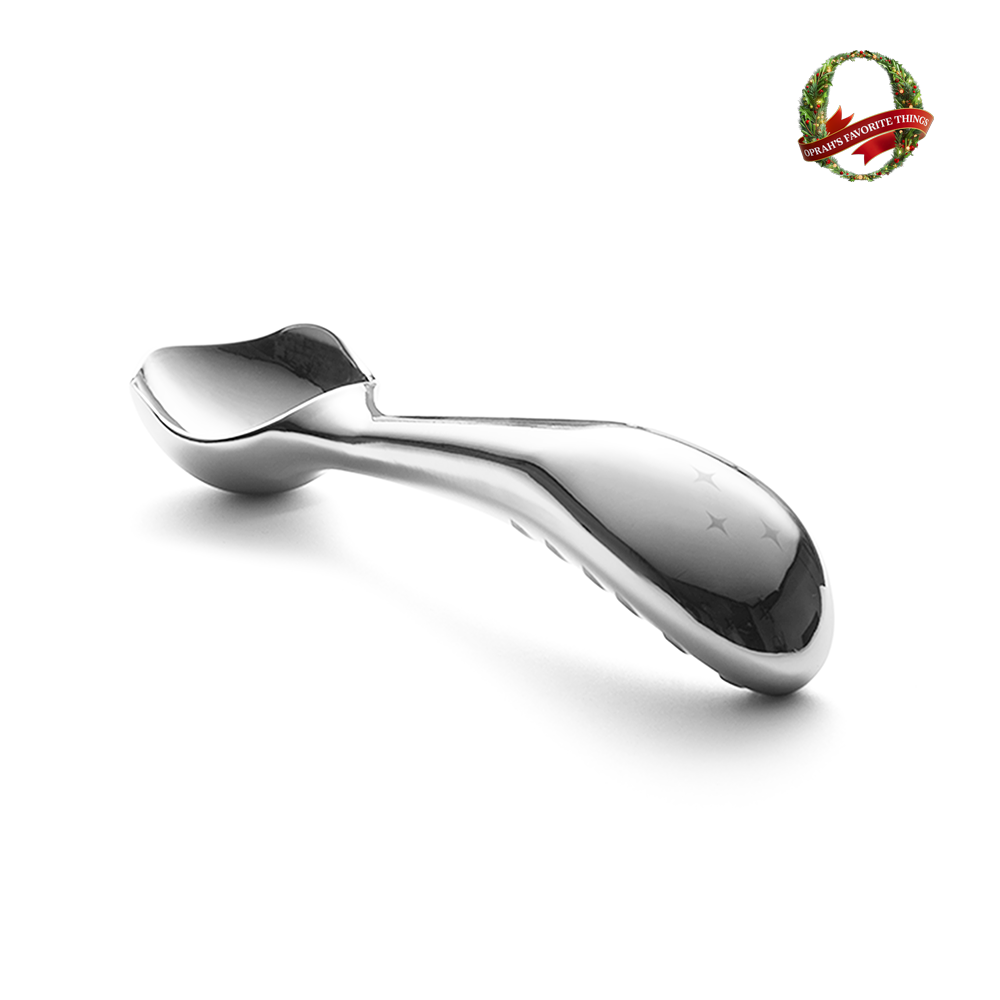
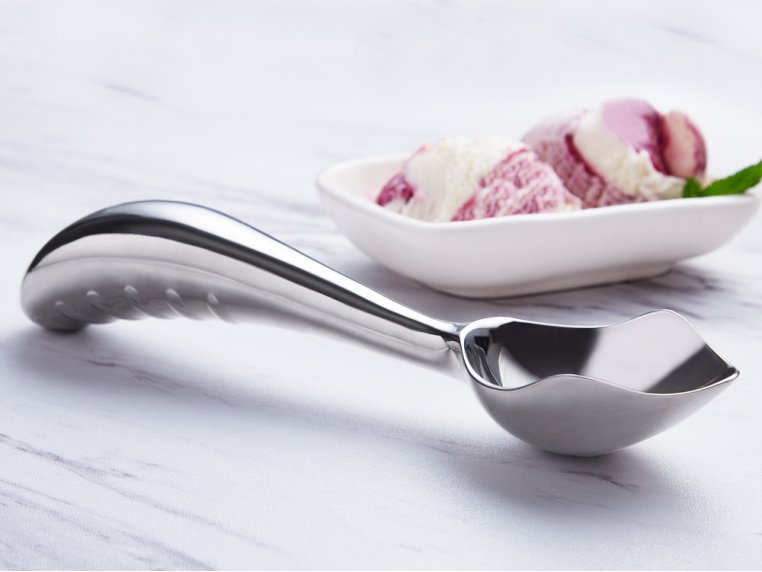
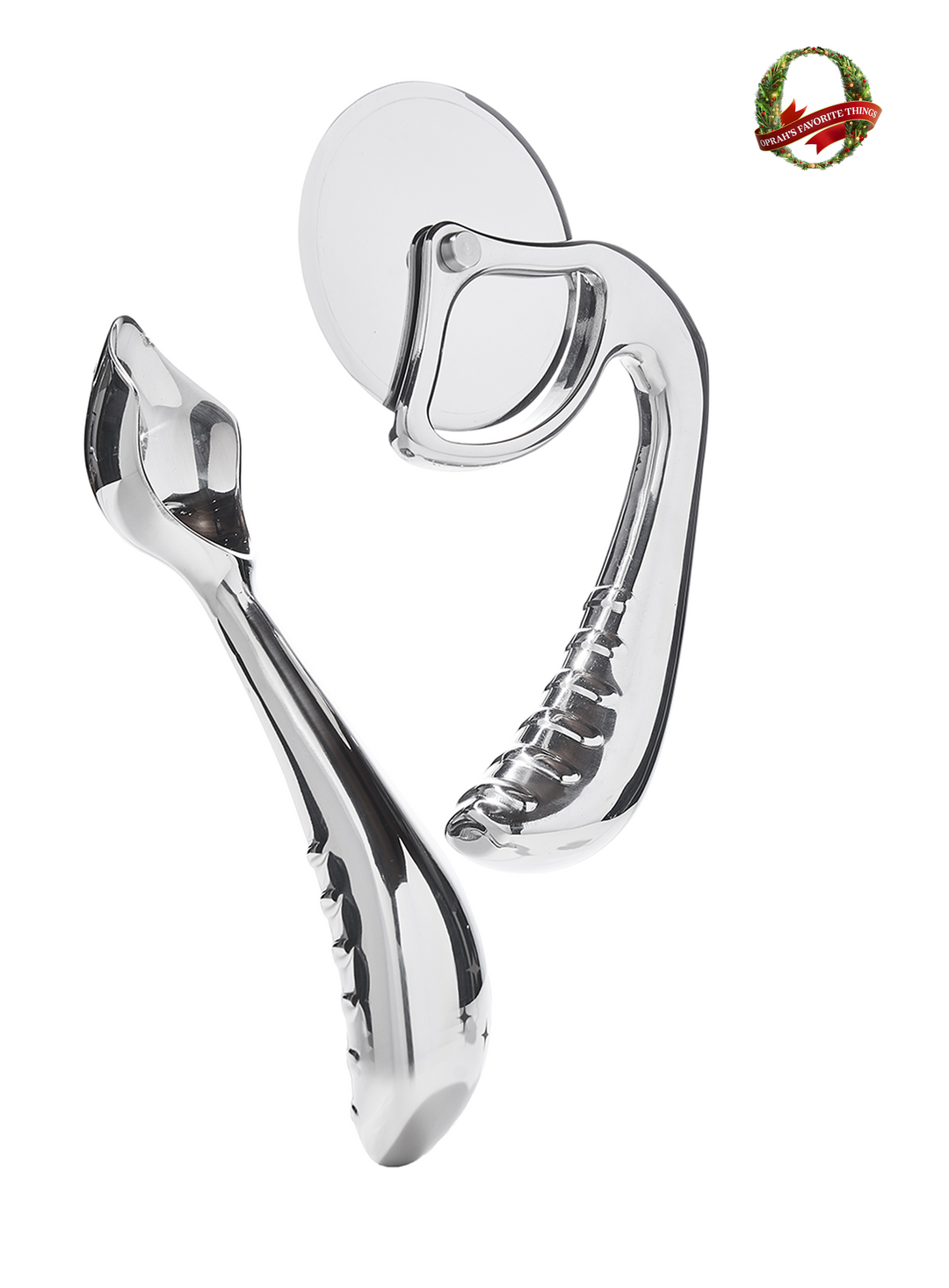
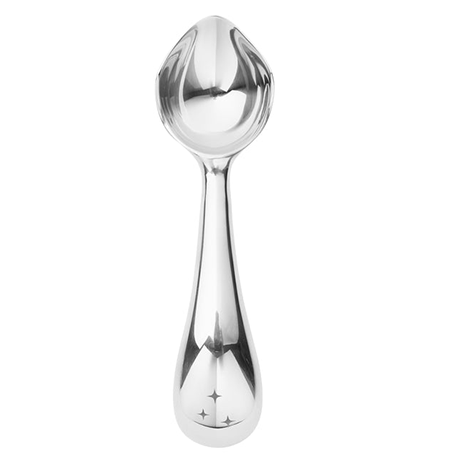
The Midnight Scoop ($47.50) is the push-style option: one piece of 100% stainless steel with a patent-pending curved handle, no moving parts, dishwasher safe, and a lifetime guarantee. For a head-to-head of the leading designs on truly hard ice cream, see our comparison: Midnight Scoop vs. Zeroll vs. OXO.
How Does an Ice Cream Scoop Actually Work?
Every scoop solves the same physics problem: hard ice cream resists being separated from the tub. Designs attack it in one of three ways. Mechanical leverage (classic, spade, and push-style scoops) uses force and blade shape to cut through; the push-style design multiplies your force by recruiting arm and chest muscles instead of the wrist. Heat (conductive and electric scoops) melts a thin layer so the scoop slides through with less force, at the cost of texture. Mechanical release (trigger scoops) doesn't help you dig at all; it only helps the scoop let go once you've done the work.
That's why "which scoop is best" depends on your freezer. A soft-serve household is fine with anything. A deep-freezer household that stores ice cream at 0°F needs leverage, because heat-based scoops can't melt fast enough and trigger mechanisms bend.
Who Invented the Ice Cream Scoop?
Alfred L. Cralle, a Black inventor and businessman from Pittsburgh, patented the first mechanical ice cream scoop in February 1897 (U.S. Patent No. 576,395, filed as an "Ice-Cream Mold and Disher"). Working as a hotel porter, he noticed servers needing two hands and two utensils to serve ice cream, so he designed a one-handed scoop with a built-in scraper to release the ice cream: the direct ancestor of today's trigger scoop. The basic idea was so sound that trigger scoops still use it, essentially unchanged, more than 125 years later.
Why Do Old Ice Cream Scoops Get Pitted?
Those gray, rough, crater-covered scoops in so many kitchen drawers are cast aluminum scoops that went through the dishwasher. Dishwasher detergent is alkaline and strips the oxide layer off bare aluminum, corroding the surface into pits and sometimes leaving a metallic taste. Stainless steel doesn't have this problem: its chromium oxide layer re-forms instantly, which is why a 100% stainless scoop can go through the dishwasher for decades and come out smooth. If your scoop is pitted, it's telling you what it's made of.
So Which Flavor Should You Scoop?
That's the one thing we can't do for you. We here at Midnight Kitchen Tools have conflicting tastes in flavors: chocolate, peanut butter cup, mint chocolate chip, cookie dough... the list goes on. But we don't disagree on delivery to the bowl, or cup, or even mouth. Go with the Midnight Scoop. You won't be disappointed.
FAQs
Q1: What are the different types of ice cream scoops?
Six main types: classic one-piece scoops, flat spades, trigger (lever) scoops, heat-conductive scoops with fluid-filled handles, electric heated scoops, and push-style ergonomic scoops designed to be driven with the arm rather than twisted with the wrist.
Q2: Who invented the ice cream scoop?
Alfred L. Cralle of Pittsburgh patented the first one-handed mechanical ice cream scoop in February 1897 (U.S. Patent No. 576,395). His scraper-release design is still the basis of trigger scoops today.
Q3: How does an ice cream scoop work?
All scoops either cut through ice cream with mechanical leverage, melt a thin layer with heat, or add a release mechanism so the scoop lets go cleanly. Leverage-based designs handle the hardest ice cream because they don't depend on melting anything.
Q4: Why do ice cream scoops get pitted and gray?
Pitting happens when bare aluminum scoops go through the dishwasher: the alkaline detergent corrodes the metal. Stainless steel scoops don't pit, which is why they stay smooth for decades of dishwasher cycles.
Q5: What type of scoop is best for hard ice cream?
A leverage-based design in solid stainless steel. Push-style scoops like the Midnight Scoop are built specifically for rock-hard ice cream straight from the freezer, with no heating, no waiting, and no moving parts to break.
Q6: Do trigger ice cream scoops work on hard ice cream?
Not well. The trigger only helps release the scoop after you've dug it; it adds no digging power, and the spring-and-lever mechanism is the first thing to bend or snap against a frozen-solid tub.