

If your scoop bends, slips, or just refuses to go in, the scoop probably isn't the first problem. Your ice cream is sitting about ten degrees colder than the temperature it's meant to be served at. Fix that, and then buy a scoop built to push instead of twist.
That's the short version. Here's the longer one, because the details change what you should actually buy.
Why is ice cream so hard to scoop?
Because your freezer is doing its job. The FDA and the USDA Food Safety and Inspection Service both put frozen storage at 0°F. That's the right number, and you shouldn't change it.
But the International Dairy Foods Association, the trade body for American ice cream makers, says ice cream dips easily between 6°F and 10°F. It also says supermarket display cases should never go above 10°F.
So your freezer is holding dessert six to ten degrees below the point where it cooperates. Nothing's broken. You're just serving it out of storage.
| Setting | Temperature | Source |
|---|---|---|
| Home freezer storage | 0°F (−18°C) | FDA, USDA FSIS |
| Easy to dip | 6°F to 10°F | IDFA |
| Display case maximum | 10°F | IDFA |
There's a second half to this, though, and it's the half that decides which scoop you need. Four things set how hard a given pint gets, and every one of them was locked in at the factory.
A study in the Journal of Dairy Science measured it directly with a penetrometer. Hardness comes down to ice crystal content, ice crystal size, fat destabilization, overrun, and the flow properties of the mix (Journal of Dairy Science). The researchers also found that ice creams got harder as the mix got more viscous.
None of that is something you can change at the freezer door. Which leaves you exactly two levers: the temperature you serve at, and how your body delivers force into a fixed, very cold material. A scoop only helps with the second one.
Why expensive ice cream is harder to scoop than cheap ice cream
More air makes ice cream softer. That sounds backwards, and it's the single most useful thing to know before you buy a scoop.
The same Journal of Dairy Science work found hardness drops as overrun rises. Overrun is how much air gets whipped into the mix. At 100% overrun, half the tub is air.
Cheap ice cream is loaded with it. Air costs nothing, and ice cream is sold by volume rather than weight, so economy brands have every reason to pump it in. Premium brands go the other way on purpose. Less air, denser texture, better mouthfeel, and a product that fights your scoop much harder.
The Kitchn reports that premium and super-premium ice creams run under 50% overrun, with some super-premium brands down near 15% to 20%. Federal rules cap anything sold as ice cream at under 100%.
| Category | Approximate overrun | How it scoops |
|---|---|---|
| Super-premium | ~15% to 20% | Hardest |
| Premium | Under 50% | Hard |
| Economy | Up to the 100% federal ceiling | Easiest |
These are category boundaries, not measured averages. But the practical point holds: if you upgraded your ice cream and suddenly started bending scoops, you didn't get unlucky. You bought a denser product.
Why the second half of the pint scoops worse than the first
Ice crystal size is the one variable that keeps changing after you get home, and it only moves one way.
Patent filings on frozen aerated products give the thresholds. Crystals above roughly 80 microns produce noticeably coarse texture. The preferred range is around 20 to 50 microns. Those filings also report crystal size climbing with overrun, roughly 35 microns at 100% overrun and 47 microns at 135% (USPTO 5,919,510).
These figures come from patent documents, which are written by applicants rather than independently peer reviewed. Treat them as the industry's own working thresholds.
Every time the door opens, the surface warms a little and refreezes. Small crystals melt and redeposit onto bigger ones. Do that twenty times over three weeks and you get a pint that's genuinely harder than the one you brought home. It's also why the IDFA tells you to store ice cream in the main compartment instead of the door, where the temperature swings most.
What to look for in an ice cream scoop for hard ice cream
Once you accept that the ice cream is a fixed input, the scoop question gets much simpler. You're not looking for a scoop that softens ice cream. You're looking for one that lets your body generate more force with less strain.
Leverage direction: push, don't twist
This is the big one. Most scoops are shaped to be twisted, which loads everything through your wrist. Your wrist is the weakest joint in the chain.
A scoop designed to be pushed forward lets you drive with your shoulder, your arm, and your body weight behind it. Same person, same ice cream, much more available force. If you only change one thing about your scoop, change this.
Solid construction with no moving parts
Triggers, levers, and spring-loaded release mechanisms all add failure points, and they fail exactly when you need them, under load in a hard pint. They also trap water and dairy in places you can't clean.
18/8 stainless steel, not aluminum
Aluminum scoops pit and corrode, especially with repeated dishwasher cycles. That pitted surface is what makes an old scoop grab and stick. Solid 18/8 stainless holds its finish, releases cleanly, and won't stain from acidic ingredients.
No antifreeze or thermal fluid in the handle
Heated and self-defrosting scoops fill the handle with a conductive fluid. That's why most of them can't go in the dishwasher, and it's why they eventually leak. We've written about this in more detail: why you should never use a warming ice cream scoop.
A bowl that isn't oversized
Bigger bowls feel like they should be better. They aren't, on hard ice cream. A larger bowl has to displace more frozen product per stroke, so it needs more force, not less.
A warranty that assumes you'll push hard
Any scoop can survive soft-serve. The question is what the manufacturer says when you lean into a super-premium pint at 0°F. A lifetime guarantee is a real signal about what the tool was designed to take.
The scoop we built for exactly this problem
Midnight Kitchen Tools started in 2013 because our founder, Michael Chou, is an aerospace engineer who got tired of bending scoops on hard ice cream. His conclusion was that the whole category had been optimizing the wrong half of the problem.
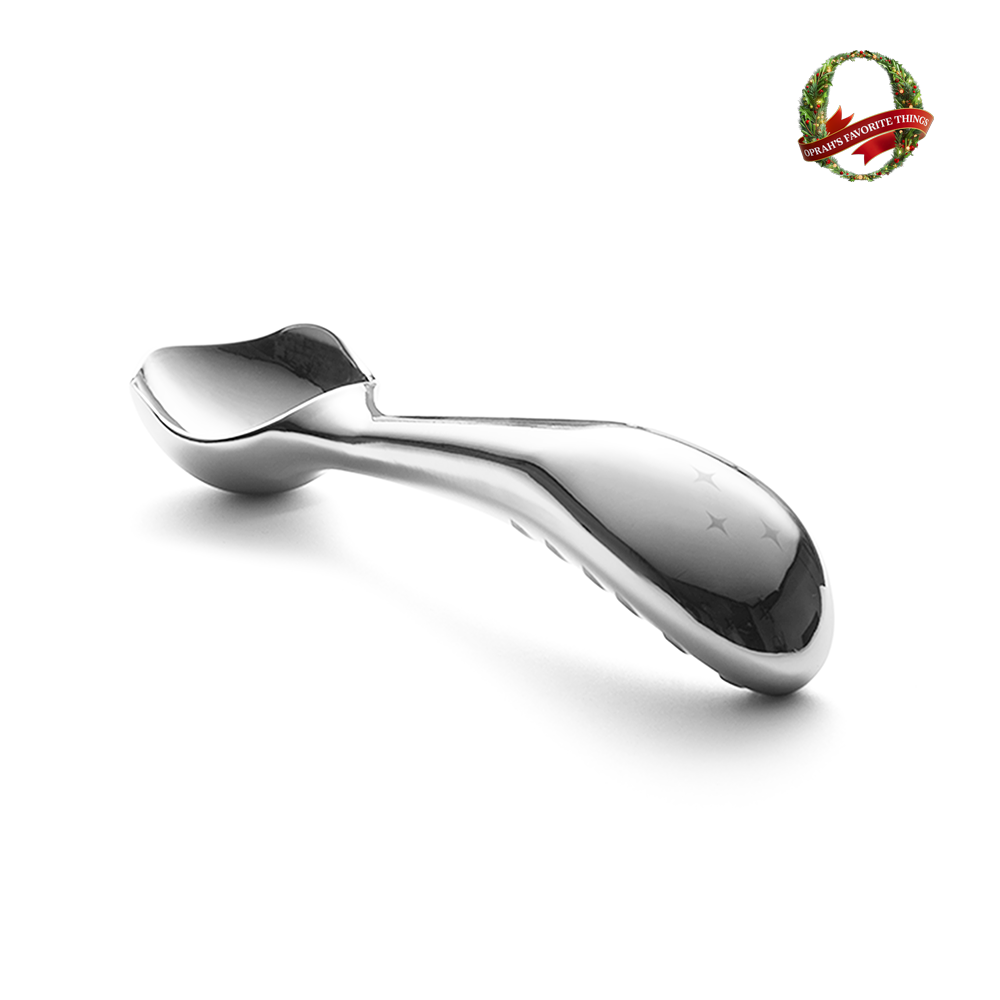
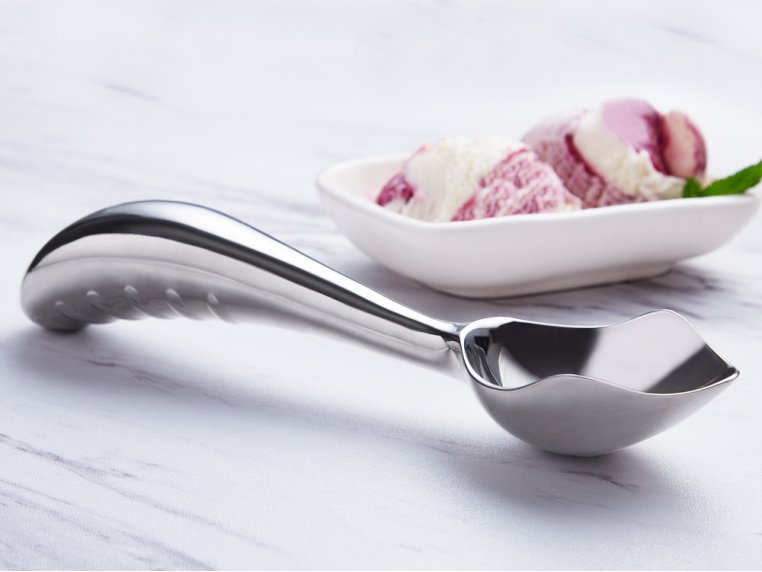
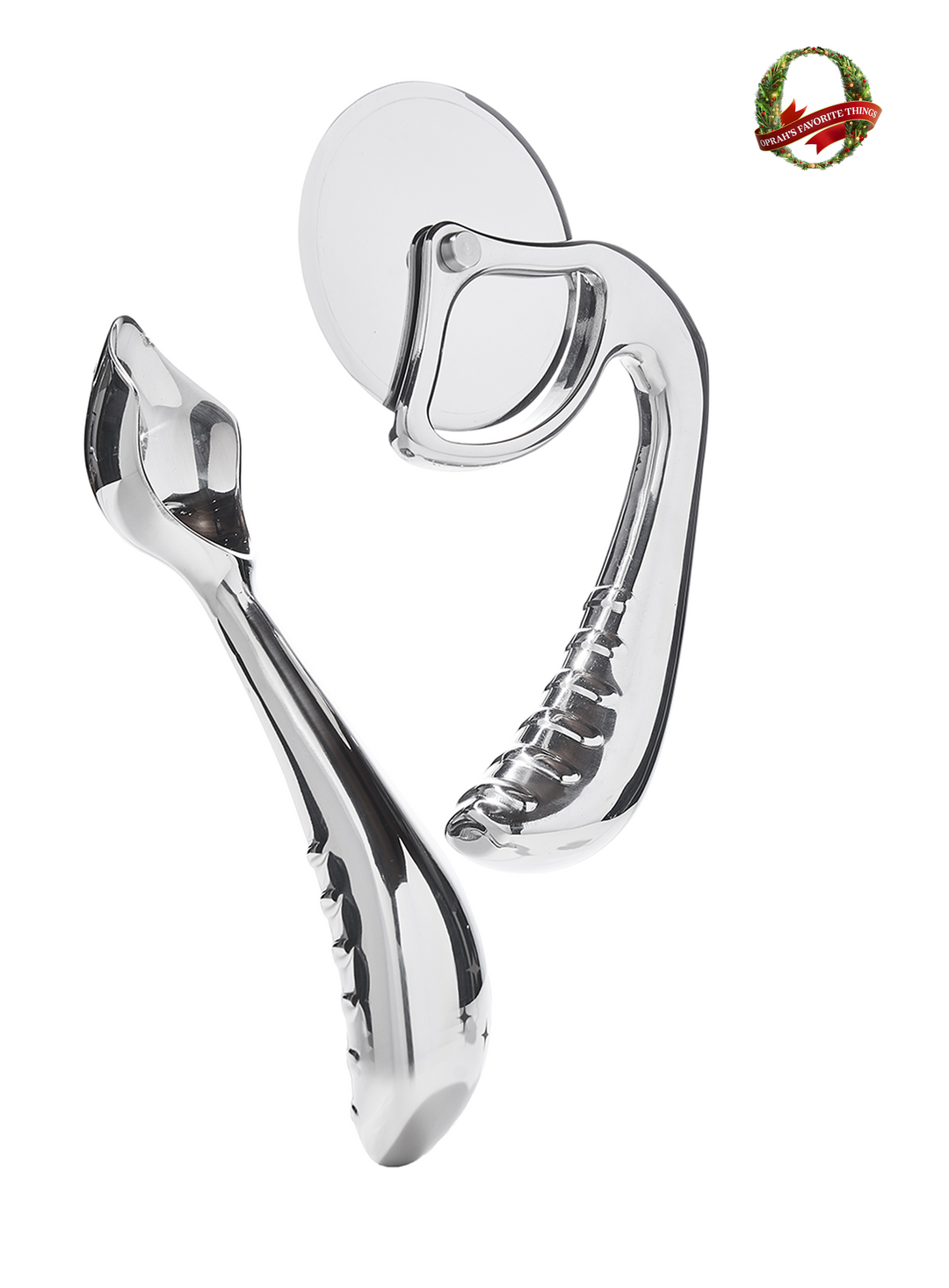
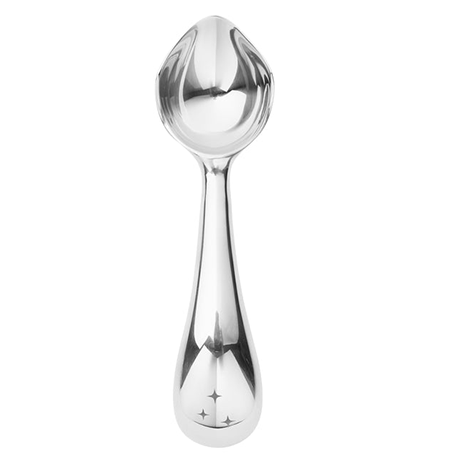
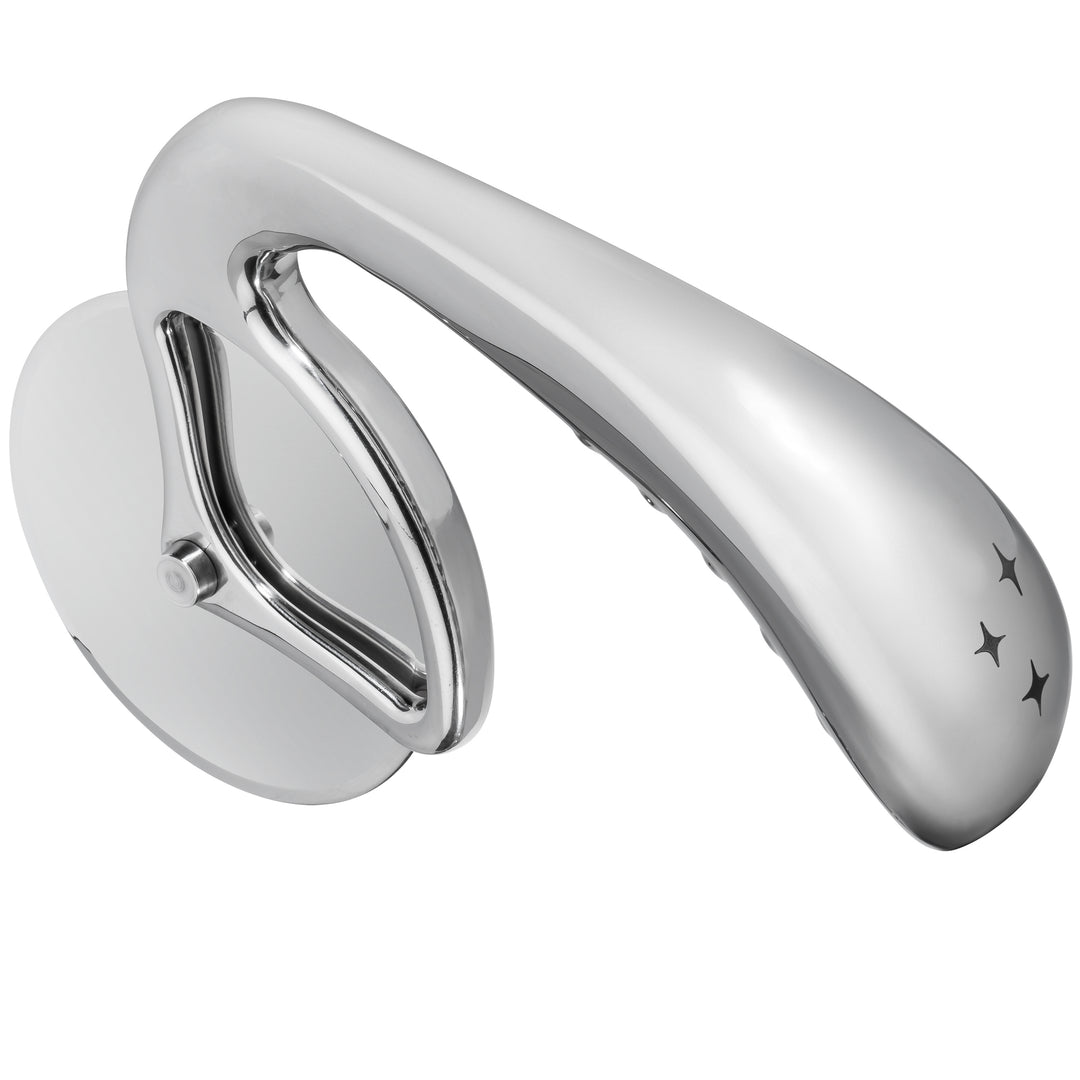
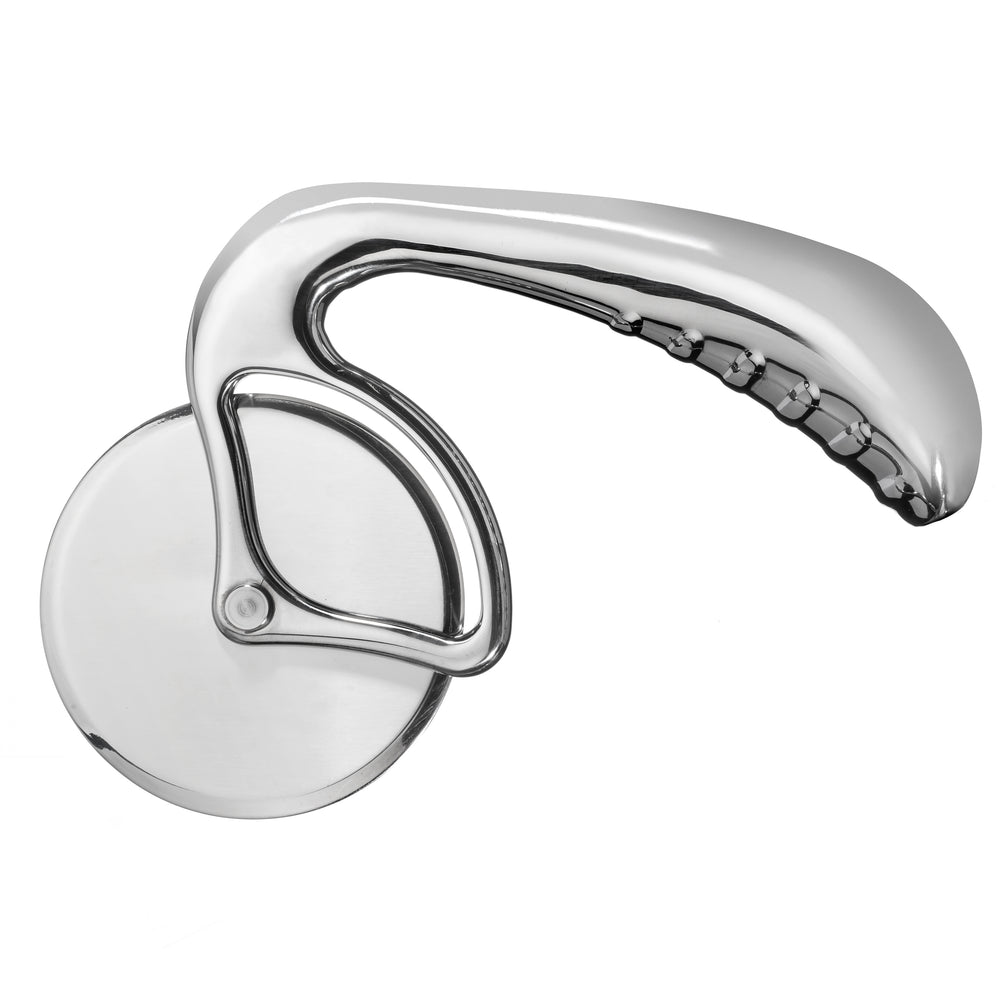
The Midnight Scoop is built around push-forward leverage instead of wrist rotation. It's a single piece of 18/8 stainless steel, made in the USA, with no moving parts, no fluid in the handle, and nothing to leak or jam. It's dishwasher safe, and it carries a lifetime guarantee. It's $47.50.
The editors at Oprah.com picked it as a gift recommendation.
What doesn't work
A few things get repeated constantly and don't hold up.
Running the scoop under hot water. It genuinely helps with sticking, so it's not useless. But it does almost nothing about the force needed to break into ice cream that's ten degrees too cold. The heat is gone within a stroke.
Microwaving the container. This melts the outer layer while the middle stays solid. When that melted layer refreezes, you get the large crystals you were trying to avoid in the first place.
Turning your freezer up. 0°F is a food safety number, not a suggestion. Solve this at the serving end.
Buying a bigger scoop. More displacement per stroke means more force required, not less.
Get the temperature right first
Even the best scoop works better on tempered ice cream. Move the container from the freezer to the fridge, or leave it on the counter, and let it come up before you serve.
How long depends on your freezer, the container, and how dense the product is. A super-premium pint at 15% overrun takes meaningfully longer than an airy economy tub. Start checking at ten minutes.
Then keep the lid sealed, store it in the main compartment rather than the door, and press the surface flat before you put it back. Surface crystal growth is what makes the top layer of a reopened pint the worst part of it.
Frequently asked questions
What is the best ice cream scoop for hard ice cream?
Look for a solid stainless steel scoop designed for push-forward leverage rather than wrist twisting, with no moving parts and no fluid-filled handle. Push leverage lets you use your shoulder and body weight instead of your wrist.
What temperature should ice cream be to scoop easily?
The International Dairy Foods Association puts the easy-dipping range at 6°F to 10°F. That's warmer than the 0°F the FDA recommends for storage, which is why ice cream straight from a properly set freezer resists a scoop.
Why is my expensive ice cream harder to scoop than cheap ice cream?
It has less air in it. Hardness drops as overrun rises, and premium brands deliberately use less overrun for a denser texture. Better mouthfeel costs you a product that's harder to serve from the freezer.
Are aluminum ice cream scoops safe?
Aluminum scoops are food safe, but they pit and discolor over time, especially in a dishwasher. That pitted surface is what makes old scoops stick. Solid 18/8 stainless steel holds its finish far longer.
Why can't some ice cream scoops go in the dishwasher?
Most that can't are heated or self-defrosting models with conductive fluid sealed in the handle. Dishwasher heat and pressure can compromise that seal. Solid one-piece stainless steel scoops have no seal to fail.
Does running a scoop under hot water work?
Partly. It reduces sticking, which is a real problem. It doesn't reduce the force needed to penetrate over-cold ice cream, because the warmth dissipates almost immediately against a frozen surface.
The short version
- Ice cream fights your scoop because it's stored six to ten degrees below its own easy-dipping range, not because it's defective.
- Four factors set hardness, and all four are decided before you buy: crystal content, crystal size, fat destabilization, and overrun.
- More air means softer ice cream. Premium products are the hardest to serve for exactly that reason.
- Temper the pint first. Then use a scoop built for push leverage, in solid stainless, with nothing sealed inside the handle.
Michael Chou is an aerospace engineer and the founder of Midnight Kitchen Tools, where he designed a push-forward ice cream scoop after concluding that the category had been solving the wrong half of the problem.