

You know the moment. Fresh pint, clean scoop, and the thing just skids across the top like it's made of concrete. So you lean on it harder. The scoop bends a little, you get a sad shaving of vanilla, and somebody in the kitchen suggests running it under hot water.
Almost every guide out there tells you to warm the scoop. That's treating a temperature problem like a tool problem, and it's why the advice never quite works.
Here's the part nobody says plainly. The FDA recommends storing frozen food at 0°F. The International Dairy Foods Association, which is the trade body for US ice cream makers, says ice cream dips easily between 6°F and 10°F. Your freezer is doing exactly what it's supposed to. It's just holding your dessert six to ten degrees below the point where it cooperates.
So why is my ice cream so hard?
It isn't hard because it's frozen. It's hard because it's colder than it needs to be for eating.
The FDA's storage guidance and the USDA Food Safety and Inspection Service both put the target at 0°F for keeping frozen food in good shape. That's the right number, and you shouldn't change it to make dessert easier.
But the International Dairy Foods Association puts easy dipping at 6°F to 10°F. They also say supermarket display cases should sit at 0°F or colder and never go above 10°F.
So the store that sold you the pint and the freezer that's holding it are both aiming at roughly the same place. Neither one is aiming at the temperature you actually want to eat at.
Four things decide how hard it gets, and you control none of them
Food scientists have measured this properly. Work published in the Journal of Dairy Science looked at what drives hardness in a penetrometer test. It came down to five things: ice crystal content, ice crystal size, how much the fat has destabilized, overrun, and the way the mix flows (Journal of Dairy Science).
Now read that list again and notice what's missing. Nothing on it happens after the pint leaves the factory.
- Crystal content and size come from how the mix was frozen and how it traveled.
- Fat destabilization is down to the recipe and the freezing process.
- Overrun, which is the air whipped in, is a recipe decision.
- Mix rheology is chemistry, settled before anything gets frozen.
The same work found that ice creams came out harder when the mix was thicker going in. A stiffer unfrozen phase meant more resistance to the probe.
By the time the pint hits your freezer, three of those four are locked. The fourth one, crystal size, only gets worse from there.
Which is why "which scoop should I buy" is the wrong first question. The ice cream is a fixed input. The only things still live when you open the drawer are its temperature and how you deliver force into it.
Why is expensive ice cream harder to scoop?
Because there's less air in it. That's the whole answer, and it surprises most people.
More air makes ice cream softer. The Journal of Dairy Science work found hardness drops as overrun goes up. Overrun is the industry word for how much air gets whipped into the mix. At 100% overrun, half the finished product is air.
Cheap ice cream is full of air. Air costs nothing, and ice cream gets sold by volume rather than weight, so economy brands have every reason to pump it in. Premium and super-premium products use less on purpose, because that's what gives you the dense, creamy texture. The trade-off is a tub that fights your scoop.
The Kitchn reports that premium and super-premium ice creams run under 50% overrun. Some super-premium brands sit closer to 15% or 20%. Federal rules cap anything sold as ice cream at under 100%.
So if you upgraded to a nicer ice cream and suddenly your scoop started bending, nothing broke. You just bought something with less air in it.
Ice crystals: the one that gets worse in your freezer
Of those four factors, crystal size is the only one still changing after you get home. And it never changes in your favor.
Patent filings for frozen aerated products spell out the thresholds. Crystals above roughly 80 microns start causing texture problems. The preferred range sits somewhere between 20 and 50 microns. Those same filings report crystal size climbing as overrun goes up, around 35 microns at 100% overrun and 47 at 135% (USPTO 5,919,510).
| Crystal size | What you taste |
|---|---|
| About 20 to 50 microns | Smooth and creamy. This is the target. |
| Above about 80 microns | Coarse, icy, and noticeably harder to get into. |
One caveat worth flagging. Those numbers come from patent documents, which are written by applicants rather than independent reviewers. Treat them as the industry's own working thresholds, not peer-reviewed findings.
Every time the freezer door opens, the surface of your ice cream warms a little and refreezes. Small crystals melt and redeposit onto bigger ones. Do that fifty times and you get the coarse, sandy texture on top of a half-eaten pint.
It's also why the IDFA tells you to keep ice cream in the main compartment instead of the door. The door swings hardest in temperature.
How do you actually measure how hard ice cream is?
With a penetrometer, and it's worth knowing because it's the difference between an opinion and a number.
In the Journal of Dairy Science method, a 42-gram stainless probe with a 60° cone drops into the sample under gravity for five seconds. The deeper it goes, the softer the ice cream. A constant-speed version of the same idea has been used on ice cream since the early 1970s (Canadian Institute of Food Science and Technology Journal).
Now notice what those methods measure. The ice cream. Nothing about the person holding the scoop, the angle of their wrist, or how much force a human has to put in. That half of it has barely been measured at all, and it's the half we care about most.
So what do you actually do about it?
The fix comes straight out of the temperature gap. You're not trying to melt anything. You're just moving the pint from storage temperature into serving range.
Temper it. Move the container to the fridge, or leave it on the counter, and give it a few minutes. How long depends on your freezer, the container, and how dense the ice cream is. A super-premium pint at 15% overrun needs noticeably longer than an airy economy tub. Start checking around ten minutes.
Keep it in the main compartment, not the door. The IDFA is clear about this one. Door storage means the biggest temperature swings, and every swing coarsens the crystals.
Seal the lid and cover the surface. Surface crystal growth is what ruins the top layer of a reopened pint.
Don't turn your freezer down. 0°F is a food-safety number. Fix this at the serving end instead.
What doesn't hold up
Hot water on the scoop. It does help the ice cream release, which is a real problem worth solving. But it does almost nothing about the force needed to break into a pint that's ten degrees too cold. The heat's gone after a stroke or two. We've written about warming scoops before if you want the longer version.
Microwaving the tub. This melts the outside while the middle stays solid. Then it refreezes into exactly the big crystals you were trying to avoid.
Buying a bigger scoop. A larger bowl moves more frozen product per stroke, so it needs more force, not less.
Where the scoop does come in
Here's the honest bit. No scoop rescues a pint that's ten degrees too cold. Ours included. If you take one thing from this article, take the tempering.
But once the temperature is sorted, there's still one variable left, and it's you. A fixed, very cold material and a body pushing into it. That's a mechanics question, and the two designs on the market answer it differently.
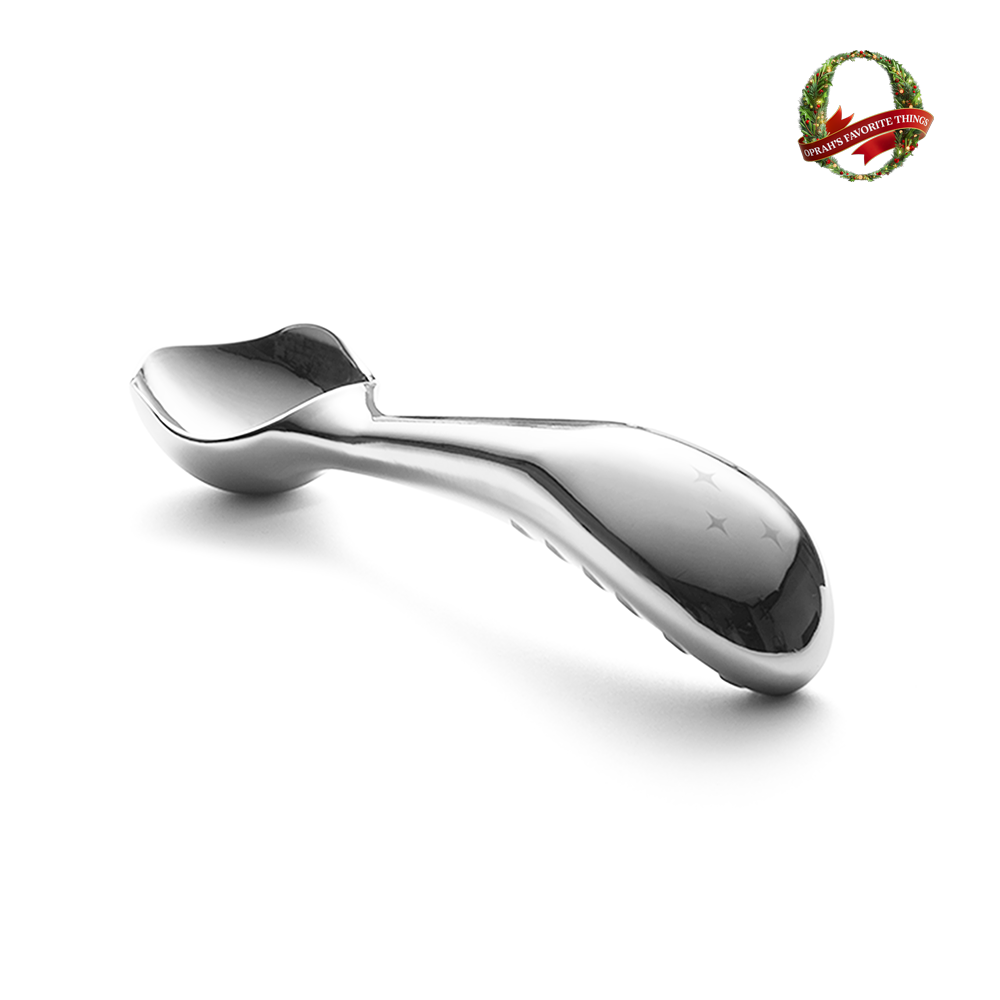
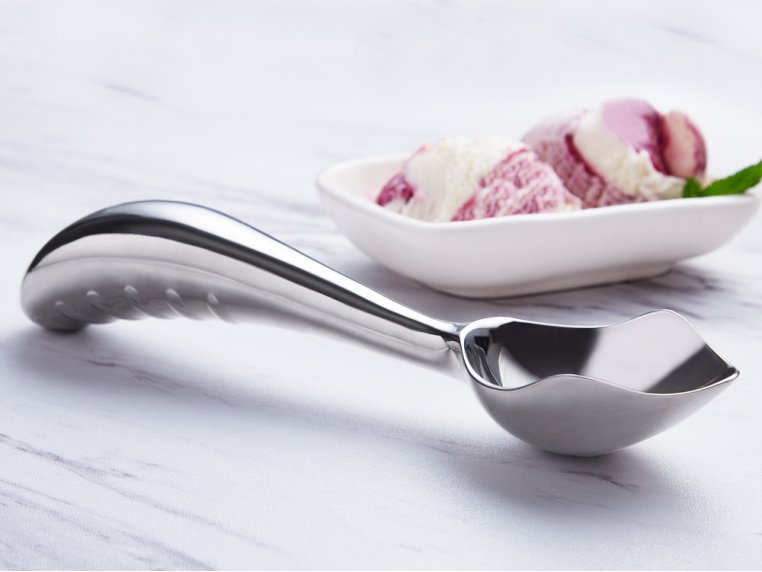
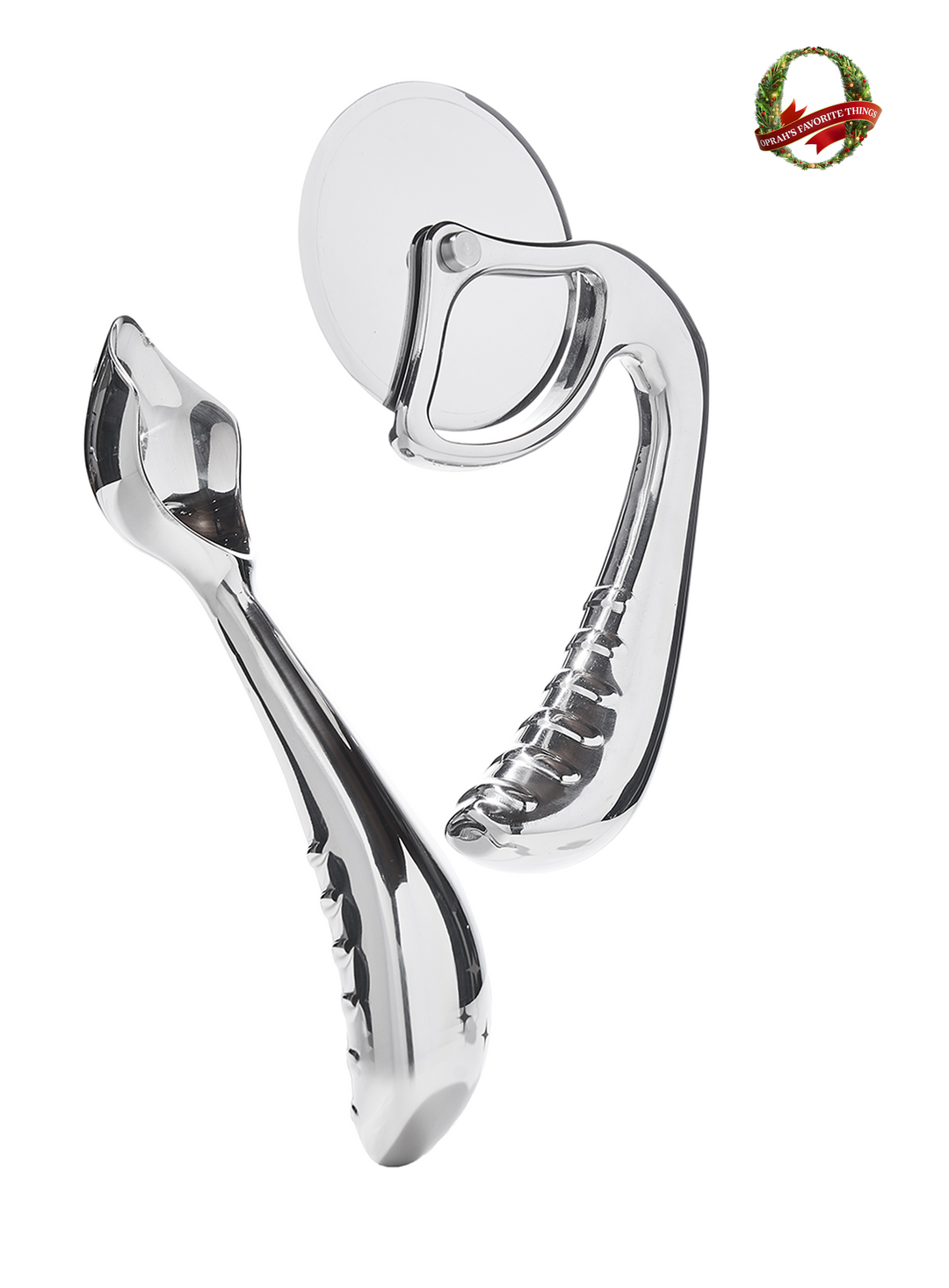
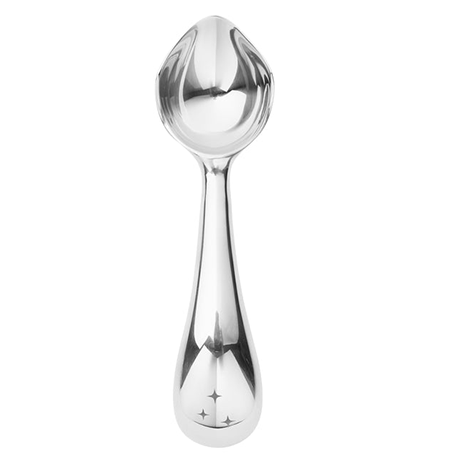
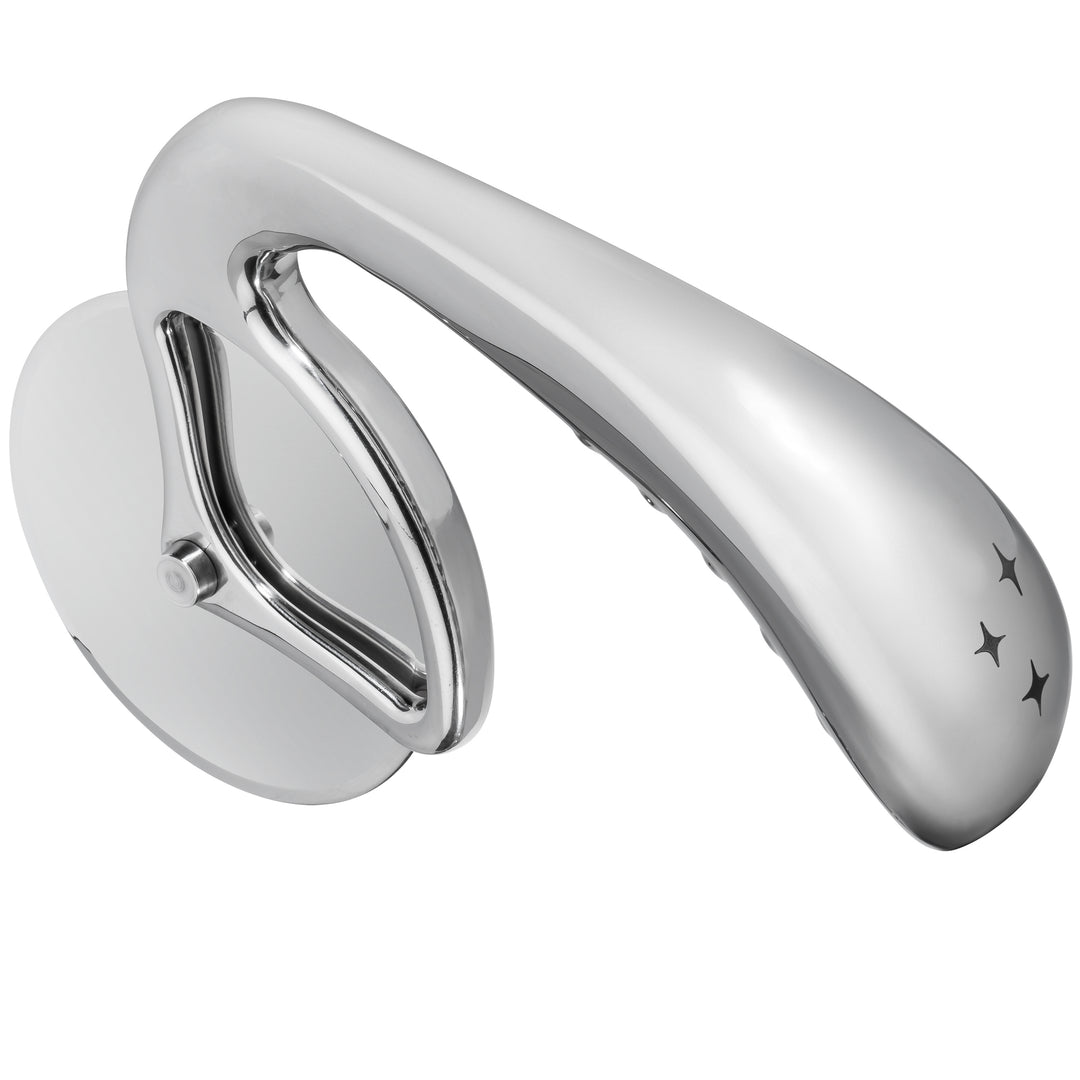
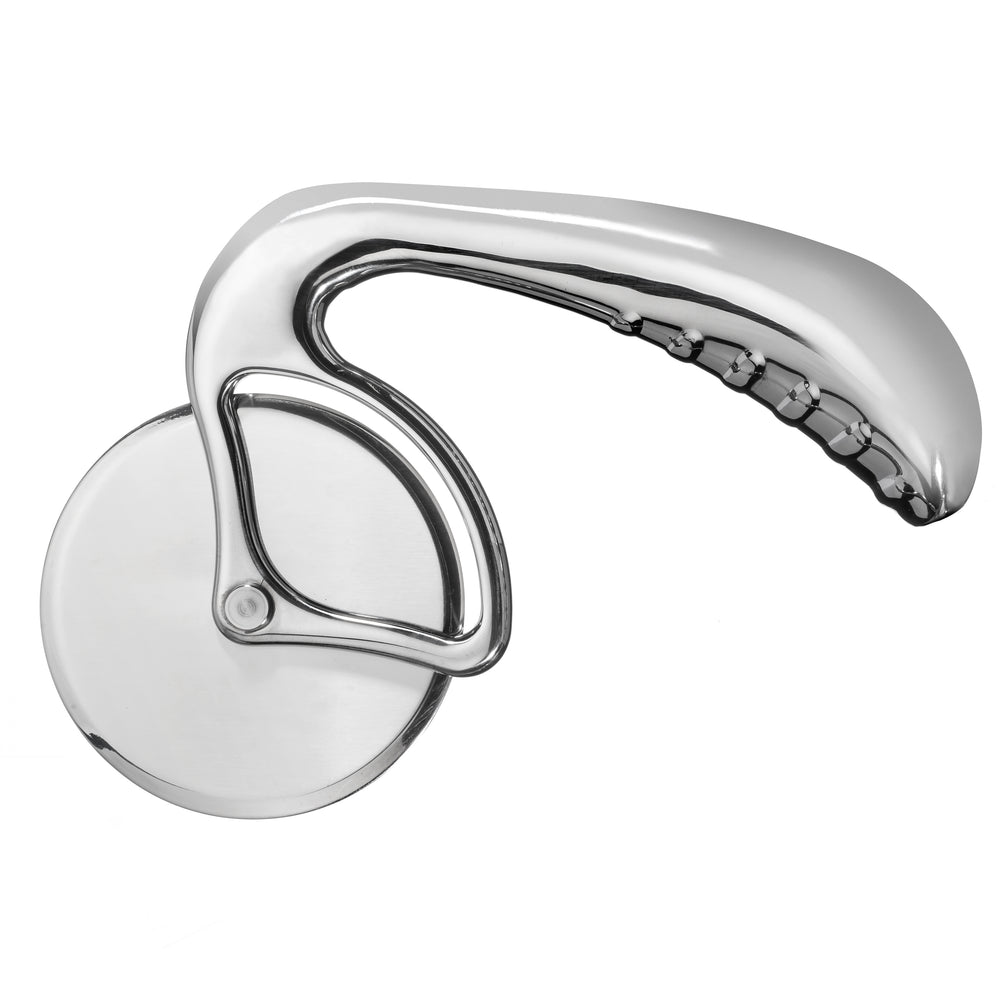
Heated handles go after sticking. Leverage geometry goes after where the load lands in your arm. Those are two different problems, and it's worth knowing which one you actually have. Our Midnight Scoop is built for the second one, using a push-forward shape so the work comes from your arm instead of your wrist. You can see how the geometry works here.
If what you want is a straight comparison against the other scoops on the market, we've put that in a separate guide.
Frequently asked questions
What temperature should ice cream be to scoop easily?
The International Dairy Foods Association puts easy dipping at 6°F to 10°F. That's warmer than the 0°F the FDA recommends for storage. It's why a pint straight from a properly set freezer fights back.
Why is my expensive ice cream harder to scoop than the cheap stuff?
Less air. Hardness drops as overrun goes up, and premium brands deliberately use less overrun to get a denser texture. Better mouthfeel, harder to serve straight from the freezer.
Does running the scoop under hot water work?
Partly. It cuts down on sticking, which is a genuine problem. It doesn't do much about the force needed to get into over-cold ice cream, because the warmth is gone on contact.
Why does the second half of a pint scoop worse than the first?
Temperature cycling. Every time it warms and refreezes, small crystals melt and redeposit onto larger ones. Past roughly 80 microns the texture turns coarse and noticeably harder.
How long should I let ice cream sit out before scooping?
Start checking at ten minutes on the counter, longer in the fridge. Dense super-premium pints need more time than airy ones. Go by feel rather than the clock.
The takeaway
Your ice cream isn't defective and neither is your wrist. It's just being stored six to ten degrees below the temperature it's meant to be eaten at, and four factors that set its hardness were all decided before you ever picked it up.
Give it ten minutes on the counter. That single change does more than any scoop on the market, ours included.
Michael Chou is an aerospace engineer and the founder of Midnight Kitchen Tools. He designed a push-forward ice cream scoop after deciding the category was solving the wrong half of the problem.